Summary
This article explores the concept of employee advocacy, where employees share positive company stories online to build trust, boost engagement, and drive leads without heavy budgets.
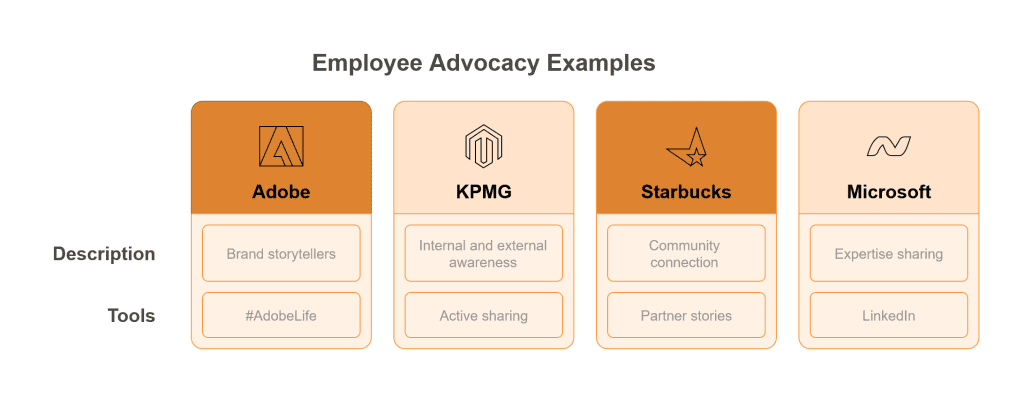
Real-world examples from Adobe, KPMG, Starbucks, and Microsoft illustrate how empowering employees as brand ambassadors enhances brand awareness, attracts talent, and strengthens community.
Key elements for successful programs include clear goals, proper training, engaging content, authenticity, recognition, and ongoing optimization. Employee advocacy significantly improves brand perception, customer trust, and business growth.
Key Points
- Employee Advocacy Defined: Employees sharing authentic positive experiences online, acting as genuine brand ambassadors.
- Benefits: Builds real trust, extends brand reach through personal networks, improves brand reputation, and humanizes the company.
- Examples:
- Adobe: Empowers employees as global brand storytellers using tools and hashtags (#AdobeLife).
- KPMG: Boosted internal communication and external brand awareness with active employee sharing.
- Starbucks: Highlights personal partner stories to create community connection.
- Microsoft: Encourages employees to share expertise and professional growth on LinkedIn.
- Success Factors: Clear goals, targeted platforms, employee training, engaging content, recognition, authenticity, and monitoring.
- Impact: Employee posts get higher engagement than company posts; 72% of people trust employee-shared content; companies see up to 26% growth boost.
Employee advocacy is a cost-effective strategy to amplify your brand through the voices of your own people.
Introduction
Want to see powerful employee advocacy examples that truly work without draining your budget? This post explores how authentic employee sharing builds incredible trust, boosts engagement, and even drives leads. We’ll uncover real-world successful campaigns, explaining their magic and giving you a simple roadmap to launch your own impactful strategy. Get set for practical insights!
What is Employee Advocacy?
What’s employee advocacy, really? Imagine your team members sharing great things about your company online. They become your best cheerleaders, spreading good vibes and stories about your workplace. It’s not like a stuffy ad; it’s real people sharing real positive experiences. This helps everyone see your company in a better light and can even draw in new talent. We’ll look at some fantastic employee advocacy examples to show you how.
Why is Employee Advocacy a Game-Changer?
So, why is employee advocacy such a game-changer? It’s because it seriously boosts brand awareness and helps people trust you more[2][4]. When your own team shares positive things, it feels much more real than a typical ad. Employees are the insiders; they bring a human touch that makes your brand relatable and trustworthy[5]. Plus, when they advocate, they often feel more pride and connection to their work, which is a win-win.
Key Points:
- Real Talk Builds Real Trust: People trust what real employees say much more than ads. When your team shares, it feels honest and true because they’re not just marketing talk; they’re sharing genuine thoughts. This makes your company seem more believable.
- Spreading the Word Further: Your employees know lots of people you don’t! When they share company news or stories, it reaches all their friends and connections. This means more eyeballs on your brand, way beyond your usual crowd.
- Making Your Company Look Good: Good vibes from your team make your whole company look better. When employees say positive things, it’s like super-powered word-of-mouth that boosts your reputation. People start seeing your brand in a much more positive light.
- Showing the People Behind the Logo: It’s easy to forget that companies are made of people. Employee advocacy shows off the real humans working there. This makes your brand feel less like a big, faceless company and more like a group of friendly, relatable folks.
Employee Advocacy Examples That Delivered Amazing Results
Lots of companies are winning big by getting their employees to share the good stuff about their brand. These aren’t just fluff stories; these are real employee advocacy examples that show different ways to get your team involved and see awesome results. Whether it’s through cool social media shares or making employees feel like brand superstars, these ideas can spark your own amazing plan. Let’s dive into how some big names are nailing it!
Adobe: Empowering Employees as Brand Champions
Adobe is a fantastic example of how to turn employees into brand champions with their “Social Shift” program. They realized that when employees chat about the company online, it actually helps bring in money and new talent. So, Adobe teaches its team how to share cool stuff about the business that fits the Adobe vibe, making sure everyone knows how to tell the company’s story in the best way. It’s about giving them the tools and confidence to shine online.
Key Points:
- Team Creates the Buzz: Adobe encourages its people to make and share their own posts on the Adobe Life blog, showing real, everyday experiences.
- Social Media Stars: They get employees excited to post on places like LinkedIn and Instagram using the fun #AdobeLife hashtag, which really gets people talking.
- Global Storytellers: Adobe picked employees from different spots to be official brand ambassadors, helping share the Adobe story far and wide.
KPMG: Boosting Brand Awareness and Internal Communication
Back in 2017, KPMG Sweden smartly used employee advocacy to get more people to know their name and to help their team look like a bunch of experts. Once they got their employee sharing plan going, KPMG saw some really significant changes. Their team started talking more internally, and the company’s brand got a lot stronger. If you peek at their Facebook page, you’ll see their employees actively sharing company updates.
Key Points:
- Better Team Talk: They got more employees chatting about company news and what’s happening in their industry.
- More People Noticed Them: Employee posts got tons of shares and clicks – over 12,900 unique clicks and 10,900 reactions in less than a year – which really spread the word about KPMG.
- Attracting Great Hires: By showing off what a good place KPMG is to work, they started attracting even better job candidates.
Starbucks: Brewing Community Through Partner Stories
Starbucks is another great place to find inspiring employee advocacy examples. They call their employees “partners,” and they do a wonderful job of encouraging them to share their personal stories and experiences. It’s all about showing the real, human side of the brand – not just the coffee, but the people and the community they build. Their approach helps customers feel a stronger connection, knowing the stories behind their daily brew.
Key Points:
- Sharing Real Moments: Starbucks partners often use hashtags like #tobeapartner to share their unique experiences, from daily joys to community work, making the brand feel very genuine.
- Building a Coffee Community: They focus on stories that highlight their company culture and how partners connect with customers and each other, strengthening that community feel.
- More Than Just Coffee: By empowering partners to share, Starbucks showcases its commitment to its people and the positive impact they have, making the brand more relatable.
Microsoft: Showcasing Expertise and a Great Place to Work
Microsoft, and especially its professional networking platform LinkedIn, offers powerful employee advocacy examples. They encourage their team to become thought leaders and share their knowledge and insights online. This not only boosts the company’s image as an expert in the tech field but also highlights what it’s like to work there. When employees share their professional journeys and learnings, it makes Microsoft look like an exciting place for growth.
Key Points:
- Experts on Display: Microsoft employees often share valuable industry insights and technical know-how, positioning both themselves and the company as leaders in their fields.
- Culture of Learning: Through employee shares, you get a peek into Microsoft’s focus on professional development and continuous learning, which is super attractive to potential hires.
- Using Their Own Tools: LinkedIn employees, in particular, are great at using their own platform to share content, demonstrating the power of professional networking and advocacy firsthand.
Key Elements of Successful Employee Advocacy Programs
So, you’ve seen some awesome employee advocacy examples, and you’re thinking, ‘How can I get that magic working for us?’ Well, building a successful employee advocacy program isn’t about luck; it’s about a few key ingredients. Get these right, and you’ll cook up a program that your team loves and that really helps your company shine. Let’s break down what makes these programs tick.
- Set Clear Goals: First up, know what you’re aiming for! What does success look like for your employee advocacy program? Maybe you want more folks to know about your brand, get your team more involved, find amazing new hires, or even boost sales. Having clear goals helps everyone understand the ‘why’ behind the program and keeps things on track.
For instance, you might aim to increase website traffic from social media or improve your company’s overall brand sentiment.
- Select the Right Platform: Next, think about where your people hang out online. Is it LinkedIn, X (Twitter), Instagram, or maybe a special industry forum? Don’t try to be everywhere. Focus your team’s sharing power on the platforms where your ideal audience is already listening and where your brand is active.
This makes sure their awesome posts get seen by the right eyes and makes their efforts more effective.
- Train Employees: Give your team the know-how! Make sure everyone understands what the program is about and how to share like a pro. This could be simple tips on using social media, understanding company guidelines, what makes a good post, or even quick guides on business communication and industry trends.
Good training means your employees will feel confident and ready to share, knowing what’s acceptable and how to represent the brand well.
- Create Engaging Content: Make sharing easy and fun by giving your team great stuff to post. Think cool articles, industry insights, fun behind-the-scenes peeks, product updates, or company news. The best content is stuff your team actually wants to share and that their friends and followers will find interesting too.
A good mix keeps things fresh, balancing value-driven content with brand promotion. Having a central place where they can find this content helps a lot.
Recognize and Reward Advocates: Don’t forget to say ‘thanks!’ When employees actively share and spread the word, a little recognition goes a long way [1]. This could be a simple shout-out, featuring top contributors, or offering small rewards and incentives to encourage participation. Showing appreciation keeps everyone motivated and excited to be part of the program.
Encourage Authenticity: Let your team be themselves! The magic of employee advocacy is that it’s real. Encourage employees to add their own voice and share their genuine experiences and insights. Posts that sound like a real person, not a company script, connect way better because personalized content can generate much more engagement. Authenticity builds trust, and that’s golden.
Monitor and Optimize: Keep an eye on how things are going. Are people sharing? What kind of posts get the most love (likes, comments, shares)? Tracking these engagement metrics, along with reach and employee participation rates, helps you see what’s working and where you can make your program even better. Use employee feedback and data to tweak your approach along the way and ensure the program stays effective.
The Impact of Employee Advocacy on Brand Perception
Ever wonder how employee advocacy actually changes how folks see your brand? It’s huge! When your team shares good stuff, people really listen. This isn’t just fluff; an active program can truly make customers see your brand in a much more positive light, building some serious street cred. These employee advocacy examples work because they tap into something real.
- Builds Trust: Did you know 72% of people trust a company more when employees share good vibes online? That’s powerful.
- Gets More Interaction: Posts from employees often get way more attention, like 8 times more engagement—than if the company posted it.
- Boosts Business: And get this, companies with happy, sharing employees can even see a 26% bump in growth each year.
Wrapping Up
So, what have we learned from all these fantastic employee advocacy examples? It’s pretty clear that turning your team into brand fans is a super smart way to build trust, get people chatting, and even find new leads, all without emptying your wallet. By checking out how companies like Adobe and KPMG do it, and by remembering to train your team and keep things real, you can build an amazing program. Let your employees be your champions, and watch your company’s good name and reach take off!
Is Your Team Ready to Represent Your Brand?
Ready to transform your workforce into a team of brand advocates?
Take our free Employer and Employee Advocacy Readiness Survey to get started with your Employee Advocacy program.
Frequently Asked Questions
What is employee advocacy?
Employee advocacy is when employees promote their company’s brand and values on social media and other platforms, sharing positive experiences and content.
Why is employee advocacy important?
It boosts brand awareness and trust, enhances employee engagement, improves talent attraction, expands social media reach, and drives more sales and leads.
How do I start an employee advocacy program?
Set clear goals, select the right platform, train employees, create engaging content, recognize advocates, encourage authenticity, and monitor performance.
What are the benefits of employee advocacy for employees?
It enhances their resume, public profile, and professional network, while also increasing their sense of ownership and pride in their work.
How can I measure the success of an employee advocacy program?
Track engagement metrics, KPIs, and employee feedback to refine and optimize your strategy.