Summary
Employee advocacy turns regular employees into authentic brand ambassadors, generating trust and engagement far beyond traditional marketing. Adobe and Cisco exemplify successful strategies that empower employees to share genuine stories, leading to increased brand visibility, lead generation, and talent attraction at a fraction of paid advertising costs. Their programs emphasize authenticity, comprehensive training, inclusive culture, and gamification to drive participation and measurable business results.
Key Points
- Power of Authenticity: Employee-shared content gets 8x more engagement than corporate posts; 76% trust individual-shared content vs company content.
- Adobe’s Approach: Social Shift program with 900 advocates, focus on employee benefit, extensive training, insider access for brand ambassadors, and personalized content sharing.
- Cisco’s Approach: “We Are Cisco” campaign promoting genuine employee storytelling, inclusive communities, gamification to boost engagement by 70%, and mobile-friendly platforms.
- Measurable Impact: Adobe reached 3 million+ social users; Cisco gained 3,000 advocates and $200K market value in 4 months; broader data shows significant traffic and ranking improvements.
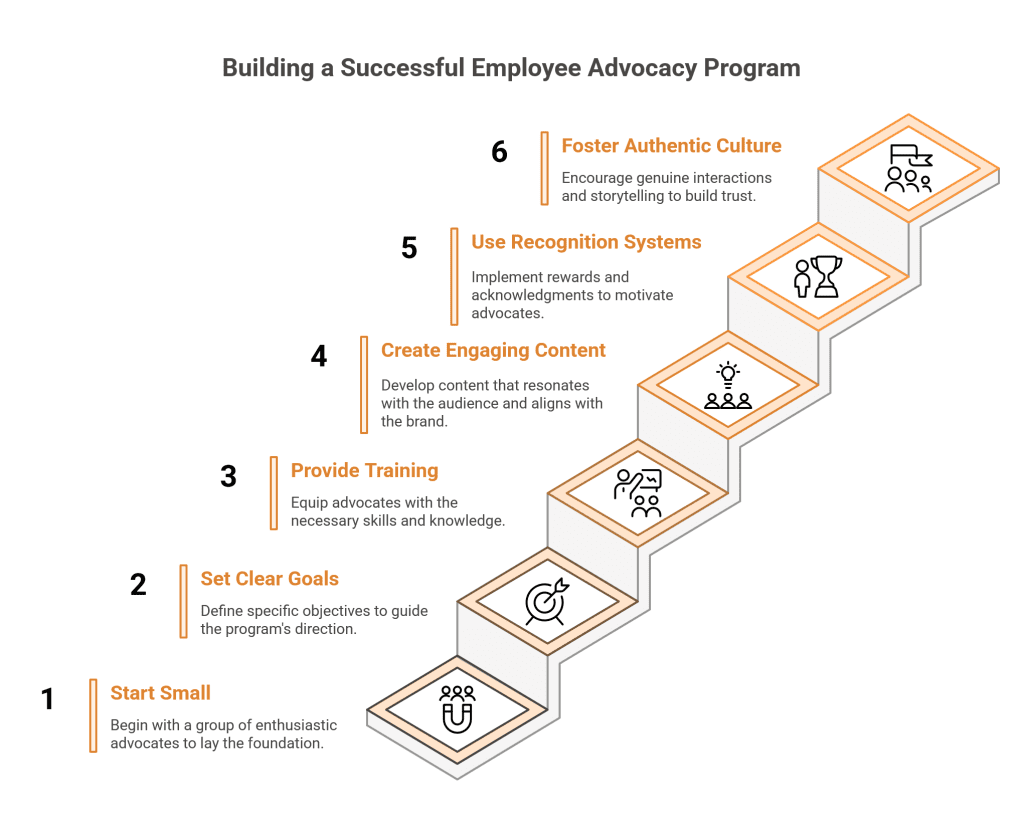
- Starting Your Own Program: Begin small with enthusiastic advocates, set clear goals, provide training, create engaging content (80% industry, 20% company), use recognition systems, and foster an authentic culture.
Employee advocacy is now essential for modern marketing success by building trust through real employee voices rather than polished corporate messaging.
Employee advocacy transforms ordinary workers into powerful brand champions. When done right, it creates authentic connections that traditional marketing cannot match. Adobe and Cisco prove this strategy works.
Both companies turned their employees into trusted voices that reach millions of people. Their programs generate real results, more leads, better engagement, and stronger brand trust.
This approach costs less than paid ads while delivering better outcomes. Smart businesses now see employee advocacy as essential, not optional. The numbers speak for themselves: employee-shared content gets eight times more engagement than corporate posts.
People trust recommendations from real employees over company marketing. Adobe and Cisco cracked the code on making this work at scale. Their success stories offer a blueprint for any organization ready to unlock their workforce’s potential.
What Makes Employee Advocacy So Powerful in Business Growth
Here’s the truth about modern marketing: people have built-in spam detectors for corporate messaging. But when Sarah from accounting shares her excitement about a new product launch, her network pays attention. That’s the magic of employee advocacy, it cuts through the noise because it comes from real people, not polished marketing teams.
Think about your own social media habits. When you see a company post versus a friend’s recommendation, which one makes you stop scrolling? The answer is obvious, and the numbers back it up.
Employee-shared content generates 8x more engagement than branded content. That’s not just a nice-to-have statistic, it’s a complete game-changer for how businesses should think about their marketing strategy. When employees share company content, they’re essentially lending their personal credibility to your brand message.
The trust factor runs even deeper. 76% of people trust content shared by individuals over companies, while 88% trust recommendations from people they know. This creates a powerful ripple effect where authentic employee voices become your most valuable marketing asset.
Beyond engagement, employee advocacy delivers measurable business results. Companies report 44.9% increased inbound traffic and 32.4% improved search engine rankings. Even more impressive, employees have a network reach 561% larger than the company itself, dramatically expanding your brand’s visibility without additional advertising spend.
The authenticity factor makes employee advocacy particularly effective for attracting top talent, with 79% of jobseekers considering employer reputation before applying.
“Employees are your best brand ambassadors because they speak with
authentic voices that customers trust.”
Adobe’s Employee Advocacy Success Story and Key Strategies
When Cory Edwards, Head of Adobe’s Social Business Center of Excellence, discovered that one employee’s social media efforts drove more revenue than their entire branded Twitter account, everything changed. This lightbulb moment sparked Adobe’s transformation into what many consider the gold standard of employee advocacy programs.
Adobe’s Social Shift program didn’t happen overnight. It started with a simple realization: employees are trusted 2x more than CEOs when talking about their companies. Instead of fighting this reality, Adobe embraced it completely. They built their entire employee advocacy strategy around empowering their workforce to become authentic brand ambassadors.
The results speak volumes. Adobe now has over 900 active employee advocates with a combined social reach exceeding 3 million people. Each participating employee averages over 4,000 social media connections, creating an amplification effect that traditional marketing simply can’t match. Their “Adobe Life” blog transformed from 400 monthly visitors to 10,000, purely through employee-generated content.
What makes Adobe’s approach different is their focus on employee benefits first. As Rani Mani, Head of Employee Advocacy at Adobe, explains: “Employees appreciate the fact that we are invested in their growth and development and not just focused on what’s in it for Adobe”. This mindset shift from company-first to employee-first created genuine enthusiasm rather than forced participation.
Adobe’s success stems from treating employee advocacy as a cultural initiative, not just a marketing tactic. They integrated social media training into new hire orientation and scaled their program to train 30% of their global workforce. The company was even ranked third among all brands for employee Twitter activity and first for the percentage of employees who actively reference their employment in their bios.
Adobe’s Brand Ambassador Program Structure
Adobe launched their formal brand ambassador program in 2014 with 21 carefully selected employees across seven locations. These weren’t random volunteers, they were strategic picks based on social media presence, industry expertise, and genuine enthusiasm for the company.
The secret sauce? Early access to information. Brand ambassadors get company announcements before they go public, allowing them to be first-to-share and establish themselves as industry thought leaders. This insider knowledge creates a sense of ownership and exclusivity that money can’t buy.
The selection process focuses on employees who already show natural advocacy tendencies. Adobe looks for people who are active on social media, respected in their fields, and genuinely excited about sharing their work experiences. This organic approach ensures authenticity, something you can’t fake or force.
The program structure includes regular check-ins, exclusive briefings, and recognition for outstanding contributions. Ambassadors receive special training and ongoing support, but the emphasis remains on authentic voice rather than scripted messaging. This balance between guidance and freedom is what makes Adobe’s program feel genuine rather than corporate.
Training and Tools That Drive Adobe’s Results
Adobe’s Social Shift training program goes beyond basic social media guidelines. It’s a comprehensive education system that builds confidence through scenario-based learning and practical application. The training covers social media best practices, brand guidelines, and most importantly, how to protect themselves while sharing authentically.
The company uses EveryoneSocial as their content sharing platform, providing employees with a curated mix of 20% Adobe content and 80% third-party industry content. This ratio is crucial, it prevents the program from feeling like a corporate propaganda machine and helps employees build their personal brands alongside Adobe’s.
Adobe created 186 different content groups, allowing employees to join topics that genuinely interest them. This personalization ensures that shared content feels authentic to each person’s voice and expertise area. Employees aren’t forced to share generic company updates, they can focus on content that aligns with their professional interests.
The training includes practical elements like disclosure requirements, escalation procedures, and content approval processes. But rather than creating fear, these guidelines provide confidence. Employees know exactly what they can share and how to handle tricky situations, removing the anxiety that often prevents participation in advocacy programs.
“Adobe’s success comes from empowering employees with the right tools
and training to share their authentic stories.”
Cisco’s “We Are Cisco” Campaign and Remarkable Outcomes
When Cisco launched their “We Are Cisco” campaign, they made a bold decision: let employees tell their own stories, in their own words. No corporate scripts, no polished marketing speak, just real people sharing what it’s actually like to work at one of the world’s biggest tech companies.
This wasn’t just another employee advocacy program. Cisco recognized that authentic employee voices carry more weight than any corporate marketing message ever could. The #WeAreCisco hashtag became a rallying cry for employees to share everything from breakthrough projects to personal career journeys.
The results speak for themselves. Within just four months of implementation, Cisco attracted over 3,000 active employee advocates who generated nearly $200,000 in estimated market value. But the real magic happened during the pandemic when employee stories became even more crucial.
As employees shifted to remote work, their social media posts created fresh content opportunities. The team constantly reviewed and updated their content strategy, moving from showcasing global offices to highlighting Cisco’s remote work culture. This real-time storytelling approach led to a 28% increase in blog views and a 42% jump in new visitors to the #WeAreCisco blog.
What makes Cisco’s approach different is their commitment to genuine storytelling. They believe “if you can see it, you can be it”, using employee stories to help potential candidates envision themselves at Cisco. The campaign showcases everything from impactful projects to why employees love their workplace, creating personal connections between current employees and prospective talent.
Building an Inclusive Employee Advocacy Culture
Cisco’s secret weapon isn’t fancy technology, it’s their commitment to making every employee feel heard. They built their entire program around one core principle: everyone has a story worth telling.
The company created 31 Inclusive Communities spanning 77 countries, with nearly 30,000 employees participating in employee resource groups where they network, develop leadership skills, and serve as change agents. These communities aren’t just feel-good initiatives, they’re strategic business drivers that help retain talent and spark innovation.
One in three Cisco employees now participates in at least one Inclusive Community, representing over 30% of the company’s workforce. These groups drive employee engagement through monthly events, discussion forums, and cultural awareness activities that are open to everyone.
The inclusive approach works because it removes barriers to participation. Instead of limiting advocacy to certain departments or seniority levels, Cisco welcomes voices from across the organization. This democratized approach ensures authentic diversity in their storytelling, reaching audiences that traditional corporate messaging might miss.
Gamification and User-Friendly Platform Design
Cisco discovered that making employee advocacy fun dramatically increases participation. They implemented gamification elements including points, leaderboards, and badges that transformed content sharing from a chore into an engaging competition.
The results were immediate and impressive. By incorporating game mechanics into their employee training programs, Cisco witnessed a remarkable 70% increase in employee engagement and completion rates. Employees began competing to earn points for mastering new skills while sharing tips with colleagues, turning mundane tasks into energizing competitions.
Their platform design prioritizes user experience above everything else. Employees can easily choose from curated content libraries and share across LinkedIn, Instagram, Twitter, and Facebook, whether they’re at their desk or on the go. The mobile-optimized design ensures that sharing content feels natural, not forced.
Cisco’s gamification strategy includes recognition systems that reward participation. They found that every time employees went through social media training, they became more active and climbed the leaderboards quickly due to healthy competition. The key insight: recognition matters more than monetary rewards, being acknowledged as a social influencer provides the biggest motivation boost.
“Cisco proves that inclusive employee advocacy programs create
authentic connections across diverse audiences.”
Proven Strategies Both Companies Used to Drive Engagement
Here’s what’s fascinating about Adobe and Cisco’s employee advocacy success: they didn’t reinvent the wheel. Instead, they mastered the fundamentals that most companies overlook. Both tech giants discovered that employee advocacy isn’t about fancy tools or massive budgets, it’s about creating genuine connections between employees and their brand story.
The secret sauce lies in their shared commitment to authenticity over automation. While many companies push scripted corporate messages, Adobe and Cisco empower employees to share their real experiences. This approach works because people can spot fake enthusiasm from miles away, but authentic passion is contagious.
Both companies invest heavily in comprehensive training programs that go beyond basic social media guidelines. They teach employees how to become thought leaders in their fields while naturally incorporating brand messaging. Adobe’s Social Shift program and Cisco’s “We Are Cisco” campaign both provide extensive resources, from content libraries to brand guidelines, making advocacy feel effortless rather than burdensome.
Recognition plays a crucial role in both programs. Adobe and Cisco celebrate their most active advocates through leaderboards, rewards, and public acknowledgment. This gamification approach transforms advocacy from a task into an engaging competition that employees actually enjoy participating in.
Perhaps most importantly, both companies treat employee advocacy as a cultural initiative, not just a marketing tactic. They integrate advocacy into their core values and company identity, ensuring that participation feels natural and aligned with employees’ personal brand-building goals.
“Successful employee advocacy requires clear goals, proper training,
and genuine employee enthusiasm.”
Measurable Results That Prove Employee Advocacy Works
Let’s cut through the marketing fluff and look at the hard numbers. When companies like Adobe, Cisco, and Dell invest in employee advocacy, they don’t just get warm feelings, they get measurable business results that would make any CFO smile.
Adobe’s Social Shift program expanded their social reach by over 3 million users, with each employee share reaching an average audience of 4,000 people. That’s the kind of organic amplification you simply can’t buy with traditional advertising.
Cisco’s “We Are Cisco” campaign attracted over 3,000 active employee participants who generated nearly $200,000 in estimated market value within just four months. But here’s what’s really impressive: they achieved this without forcing participation or creating corporate propaganda.
Dell’s results speak volumes about long-term commitment. Their employee advocacy program drove more than 150,000 shares and 45,000 website clicks, reaching over 1.2 million people in 12 months. The reach amounted to an audience that would cost hundreds of thousands in paid advertising.
The broader industry data is equally compelling. Employee-generated content receives 8x more engagement than branded content, while companies with formal employee advocacy programs report 44.9% increased inbound traffic and 32.4% improved search engine rankings. These aren’t vanity metrics, they’re business-changing results that prove employee advocacy delivers real ROI.
“The numbers don’t lie – employee advocacy delivers measurable
business results that traditional marketing cannot match.”
How to Launch Your Own Employee Advocacy Program
Starting an employee advocacy program requires careful planning and the right approach. Learn from Adobe and Cisco’s success by following proven steps that build engagement gradually. Focus on creating authentic participation rather than forcing employee involvement. An excellent starting point is taking the Free Employee Advocacy Mastery Course from Social Genie.
The key to successful program launch lies in starting small and scaling smart. Begin with a pilot group of 10-20 enthusiastic employees from different departments, marketing, sales, and customer success work particularly well. These early advocates become your program champions who help spread enthusiasm organically throughout the organization.
Essential Launch Steps:
- Set clear, measurable goals for brand awareness, lead generation, or talent attraction
- Select the right social media platforms where your target audience is most active
- Develop comprehensive employee training materials covering social media best practices and brand guidelines
- Create an easy-to-share, engaging content library with 80% industry content and 20% company content
- Establish recognition and reward systems to acknowledge active participants and maintain momentum
- Monitor performance and optimize regularly using engagement metrics and employee feedback
- Foster authentic participation through company culture rather than mandatory requirements
Remember that employee advocacy isn’t a one-and-done exercise, it’s a new way of engaging that requires sustainability for maximum impact. Tap into existing communication channels like email, intranet, and town halls to announce your program. Get leadership involved as role models, and encourage mobile sharing, since mobile users share more than desktop users. Most importantly, focus on the personal benefits for employees, such as building their professional brands and thought leadership.
“The best employee advocacy programs start small, focus on
authenticity, and grow through genuine employee enthusiasm.”
Wrapping Up
Employee advocacy represents a powerful opportunity for businesses to amplify their brand message through authentic employee voices.
Adobe and Cisco demonstrate that well-executed programs deliver measurable results including increased engagement, expanded reach, and improved business outcomes. Success requires commitment to employee training, authentic culture building, and ongoing program optimization.
Start small, focus on authenticity, and let your employees become your most trusted brand ambassadors.
Ready to transform your employees into brand champions? Take this Free Employee Advocacy Mastery Course and begin building authentic connections that drive real business results.
FAQ Section
Q: What is employee advocacy and why does it matter?
A: Employee advocacy is when employees promote their company’s brand, products, or services through their personal networks. It matters because people trust employee recommendations 8x more than corporate marketing.
Q: How long does it take to see results from employee advocacy programs?
A: Most companies see initial results within 3–4 months, with significant impact typically visible within 6–12 months of consistent program implementation.
Q: What social media platforms work best for employee advocacy?
A: LinkedIn, Twitter, and Facebook are most effective for B2B companies, while Instagram and TikTok work better for consumer brands and creative industries.
Q: How do you motivate employees to participate in advocacy programs?
A: Provide proper training, make sharing easy with tools and content, offer recognition and rewards, and ensure participation feels authentic rather than mandatory.
Q: What are the biggest challenges in implementing employee advocacy?
A: Common challenges include low employee participation, lack of leadership support, insufficient training, and difficulty measuring ROI. These can be overcome with proper planning and gradual implementation.