Summary: How to Fix Employee Advocacy Challenges Fast and Easily
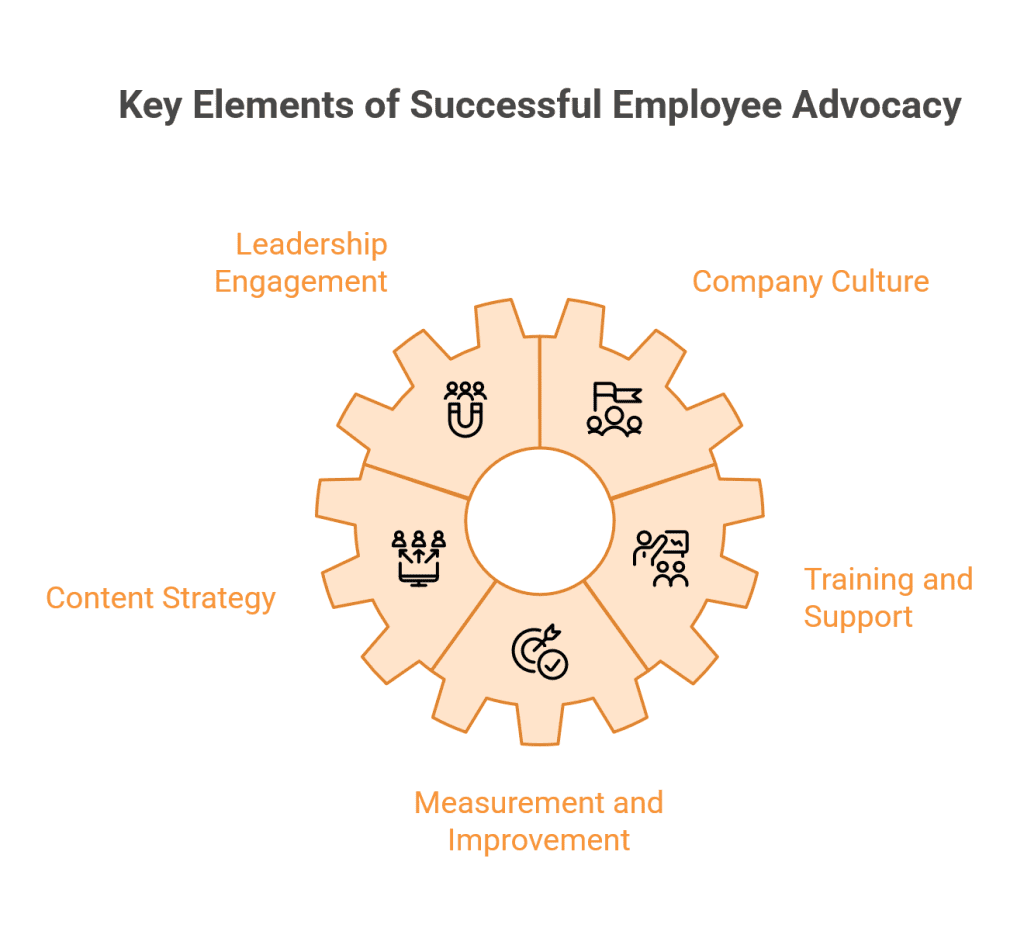
Employee advocacy programs often fail due to fundamental organizational flaws rather than employee disinterest. Key reasons include lack of authentic leadership buy-in, weak company culture, poor content strategies, and insufficient training/support. Successful programs treat advocacy as a cultural shift, empower authentic voices, and continuously measure and improve their efforts.
Key Points:
Leadership Engagement is Crucial: Programs with active executive participation see much higher adoption. Leaders must genuinely engage by sharing content and supporting employees visibly.
Company Culture Matters: Employees won’t advocate for brands they don’t believe in. Toxic or disconnected cultures suppress participation; strong cultures build pride, trust, and alignment with company mission.
Content Strategy Should Empower, Not Push: Overly promotional or rigid content kills engagement. Successful programs offer diverse, valuable, customizable content that employees want to share and that enhances their professional image.
Training and Ongoing Support are Essential: Proper social media training, clear guidelines, and continuous feedback help employees feel confident and motivated. Advocacy is a skill that needs nurturing, not a one-time task.
Measure What Matters & Continuously Improve: Track meaningful KPIs like engagement, lead generation, and employee satisfaction rather than vanity metrics. Use data and feedback loops to refine programs and drive long-term success.
By addressing these root causes and implementing strategic fixes, companies can transform failing advocacy initiatives into powerful business drivers.
Employee advocacy challenges are crushing companies everywhere. Despite promising huge returns, messages from employees reach 561% further than corporate posts, most programs crash spectacularly. Here’s the brutal truth: only 17% of companies even have formal advocacy programs, and most of those barely survive their first year.
Why? It’s not because employees don’t care. It’s because organizations make fundamental mistakes that kill enthusiasm before it starts. When Adobe launched their program, they got it right by giving employees real training and tools. Meanwhile, countless others fail because they treat advocacy like a marketing afterthought instead of a cultural shift.
The companies that succeed, like Cisco, which generated \$196,000 in market value within four months, understand something crucial: advocacy isn’t about pushing corporate content through employee accounts. It’s about empowering authentic voices while fixing the broken systems that sabotage participation from day one.
The Hidden Culprits Behind Program Failure
Most companies blame low participation rates for advocacy failures, but that’s just the symptom. The real culprits hide deeper within organizational culture and strategy. These fundamental flaws create a domino effect that kills enthusiasm and destroys results. Understanding these root causes is the first step toward building programs that actually thrive.
Here’s what’s really happening: organizations launch advocacy programs without addressing the underlying issues that make employees hesitant to participate. They focus on tools and content while ignoring the cultural barriers that prevent authentic engagement. It’s like trying to grow plants in toxic soil, no matter how good your seeds are, nothing will flourish.
The most successful programs recognize that employee advocacy challenges stem from deeper organizational problems. Companies with thriving advocacy initiatives don’t just have better tools; they have stronger cultures, more engaged leadership, and clearer communication strategies. When you fix these foundational issues, participation naturally follows.
Lack of Authentic Leadership Buy-In
When executives treat advocacy as a “nice-to-have” marketing tactic, employees notice immediately. Without genuine leadership participation, programs become hollow initiatives that nobody takes seriously. Leaders must walk the walk, not just talk about social media engagement in boardroom meetings.
The data tells the story: programs with active executive participation see dramatically higher adoption rates. When CDW’s leadership team started actively sharing content, their program manager described the difference as “night and day in terms of adoption across the CDW worker base”. Employees mirror their leaders’ behavior, if executives don’t engage, why should anyone else?
But here’s the kicker: signing off on a program isn’t enough. Real leadership buy-in means executives are sharing content, engaging with employee posts, and demonstrating that advocacy matters to the organization’s success. Without this visible commitment, employees question the program’s importance and participation drops.
Weak Company Culture and Employee Disconnection
Employees won’t champion brands they don’t believe in. When company culture feels toxic or disconnected, asking staff to become brand ambassadors backfires spectacularly. Trust and cultural alignment from the foundation of successful advocacy, without them, programs crumble before they start.
Think about it: would you enthusiastically promote a company where you feel undervalued, unheard, or disconnected from the mission? Of course not. Yet, many organizations launch advocacy programs while ignoring fundamental culture problems that make employees reluctant to associate their personal brand with their employer.
The most telling sign? When employees worry about the repercussions of posting about their company. In controlling cultures, advocacy programs put employees in uncomfortable positions where they fear saying the wrong thing or facing backlash. This anxiety kills participation before it starts.
Companies with strong advocacy programs invest in culture first. They create environments where employees feel proud of their work, trust their leadership, and believe in the company’s mission. When these elements align, advocacy happens naturally, employees share because they want to, not because they’re asked.
“Success isn’t about perfect employees, it’s about fixing broken systems.”
Content Strategy Mistakes That Kill Engagement
Content strategy mistakes are the silent killers of employee advocacy programs. While companies spend months perfecting their advocacy platforms and training schedules, they completely botch the one thing that matters most: what employees actually share. The harsh reality? Only 1 in 10 employees actively share advocacy content provided by their employer.
Here’s what’s happening: organizations create content that serves their marketing goals, not their employees’ professional needs. They pump out promotional material that makes employees look like walking billboards rather than industry experts. When your sales engineer shares the same generic product announcement as your HR manager, something’s seriously wrong.
The most successful advocacy programs understand that content strategy isn’t about control, it’s about empowerment. Companies like those highlighted in recent research see dramatically higher engagement when they provide diverse, valuable content that employees actually want to associate with their personal brand. The difference between thriving and failing programs often comes down to one simple question: “Would I share this on my own LinkedIn profile?”
Over-Reliance on Corporate Promotional Material
When employees only get sales pitches and product announcements to share, their networks tune out fast. People follow employees for insights and expertise, not constant commercials. Research shows that overly promotional content performs poorly because audiences quickly recognize and dismiss obvious marketing attempts.
Smart programs mix company updates with industry news, thought leadership, and personal perspectives that add real value. The 80/20 rule works well here: 80% valuable industry content and insights, 20% company-specific updates. This approach keeps employee networks engaged while still achieving business objectives.
The key is understanding what makes content shareable. Employees want to look knowledgeable and helpful to their networks, not like they’re pushing products. When you give them content that enhances their professional reputation, participation naturally increases.
Forcing Rigid, Pre-Approved Messages
Nothing kills authenticity faster than forcing employees to share identical, pre-written posts. When everyone sounds like corporate robots, audiences lose interest and trust plummets. Generic, impersonal messages fail to engage target audiences because they lack the personal touch that makes employee advocacy effective.
Successful programs provide content frameworks while encouraging personal voice and customization that feels genuine. Instead of demanding word-for-word copying, give employees key talking points and let them craft messages in their own style. This approach maintains brand consistency while preserving the authenticity that makes employee voices powerful.
The solution isn’t eliminating guidelines, it’s creating flexible ones. Provide suggested topics, key messages, and examples, but trust employees to adapt content to their unique perspectives and networks. When employees can personalize messages according to their experience and style, the content becomes more compelling and authentic.
“Generic content creates generic results, and generic results create program failure.”
Training and Support Failures That Sabotage Success
Training and support failures are among the biggest employee advocacy challenges that organizations face. Most companies hand employees a social media tool and expect magic to happen. Without proper training, clear guidelines, and ongoing support, even willing participants feel lost and overwhelmed. These support failures create anxiety, reduce participation, and ultimately destroy program momentum before it builds.
Here’s the reality: 53% of organizations cite content challenges as their biggest advocacy hurdle, while 49% struggle to keep employees motivated. But these aren’t content problems, they’re training problems. When employees don’t understand what to share, how to share it, or why it matters, they simply stop participating.
The most successful advocacy programs recognize that training isn’t a one-time event. Companies like Dell created a “social media university” that helps advocates learn through collaboration and ongoing education, resulting in 1,200 active champions across 84 countries. This approach works because it treats advocacy as a skill that needs continuous development, not a checkbox to complete during onboarding.
Insufficient Social Media Training and Guidelines
Many employees fear saying the wrong thing online, especially when representing their employer. Without clear social media guidelines and basic training, they either avoid participation entirely or make costly mistakes. Research shows that employees often feel paralyzed by the fear of posting something inappropriate or misaligned with company values.
Comprehensive training programs eliminate this fear and build confidence. Effective training should cover both the technical aspects, how to use platforms, when to post, what hashtags to include, and the strategic elements like understanding audience needs and crafting authentic messages.
The key is creating guidelines that protect without paralyzing. Intel’s social media guidelines exemplify this balance, providing clear boundaries while encouraging authentic expression. When employees understand the rules and feel confident in their knowledge, participation naturally increases.
Lack of Ongoing Support and Feedback
Launching a program isn’t enough, successful advocacy requires continuous nurturing. Without regular feedback, performance insights, and ongoing support, employees lose motivation and drift away. Only 1 in 10 employees actively share advocacy content provided by their employer, largely because they don’t receive the ongoing guidance they need.
Programs that provide consistent guidance and recognition maintain higher participation rates long-term. This means regular check-ins, feedback sessions, and continuous learning opportunities. Employees need to understand how their efforts contribute to company goals and see the impact of their participation.
The most effective approach involves monthly or quarterly reviews, where companies share advocacy data with employees, helping them understand their contribution while gathering feedback to improve the program. This creates a positive feedback loop that keeps employees engaged and motivated to continue participating.
“Great advocates aren’t born, they’re trained, supported, and empowered.”
Proven Solutions That Transform Failing Programs
The good news? Every employee advocacy challenge has a tested solution. Companies like BeachFleischmann transformed their struggling efforts into $200,000 in new business by implementing strategic fixes. These proven solutions address root causes rather than symptoms, creating sustainable programs that deliver real results.
Here’s what separates winners from losers: successful companies don’t just launch advocacy programs, they fix the fundamental issues that kill participation. When Sumo Logic implemented the right strategies, they generated $670,561 in earned media value during one campaign alone, with content generating 129,452 clicks and 726,642 shares. That’s the power of addressing core problems instead of surface symptoms.
The transformation doesn’t happen overnight, but it’s predictable when you follow proven frameworks. Organizations that focus on fixing leadership engagement, content strategy, and employee support see dramatic improvements within months, not years.
Building Authentic Leadership Participation
Leaders must become active advocates themselves, sharing content regularly and engaging with employee posts. When executives demonstrate genuine commitment through consistent participation, it signals program importance and motivates broader employee involvement. This top-down approach creates a cultural shift that drives results.
Microsoft’s leadership team actively participates in internal discussions on Viva Engage, joining conversations rather than simply pushing out messages. This approach builds trust and ensures employees feel heard, which ultimately leads to stronger external advocacy. When CDW’s leadership team started actively sharing content, their program manager described the difference as “night and day in terms of adoption across the CDW worker base”.
But here’s the crucial part: signing off on a program isn’t enough. Real leadership buy-in means executives are sharing content, engaging with employee posts, and demonstrating that advocacy matters to the organization’s success. Without this visible commitment, employees question the program’s importance and participation drops.
Creating Diverse, Engaging Content Strategies
Successful programs provide content variety that serves different employee interests and network needs. Mix company updates with industry insights, thought leadership pieces, and behind-the-scenes content. Give employees customization freedom while maintaining brand consistency through flexible frameworks rather than rigid scripts.
The 80/20 rule works brilliantly here: 80% valuable industry content and insights, 20% company-specific updates. This approach keeps employee networks engaged while still achieving business objectives. Adobe empowers employees to share thought leadership content through comprehensive training and tools, positioning them as knowledgeable voices in their fields.
Smart companies create multiple captions and graphics for every piece of content, about five variations work well. When employees mix and match these options and add their own insights, each post looks unique while maintaining brand consistency. This eliminates the “company robot” problem that kills authenticity and engagement.
“Every failing program is one strategic fix away from breakthrough success.”
Measuring Success and Maintaining Momentum
Without proper measurement and ongoing optimization, even successful programs eventually stagnate. Smart organizations track meaningful metrics, gather employee feedback, and continuously refine their approach. This data-driven mindset ensures programs evolve with changing needs and maintain long-term effectiveness.
Here’s the reality: 90% of companies struggle to measure their employee advocacy challenges effectively. They track vanity metrics like total posts shared instead of focusing on business impact. The companies that succeed understand that measurement isn’t just about numbers, it’s about understanding what drives real results and using that knowledge to improve continuously.
The most effective programs treat measurement as an ongoing conversation, not a quarterly report. They create feedback loops that help employees understand their impact while providing leadership with actionable insights to optimize the program.
Key Performance Indicators That Matter
Focus on metrics that reflect real business impact: engagement rates, lead generation, brand awareness, and employee satisfaction. Companies with engaged employees see a 20% increase in sales, while programs that track meaningful KPIs generate significantly better results.
The key is balancing participation metrics with business outcomes. Track both the percentage of employees actively sharing content and the quality of engagement that content receives. Monitor reach and impressions to understand your program’s visibility, but don’t stop there, measure click-through rates and website traffic generated by employee advocates.
Smart programs also track employee sentiment and satisfaction with the advocacy process. When 86% of advocates report that their social media activity benefits their job, you know you’re on the right track.
Continuous Improvement and Program Evolution
Regular program audits, employee feedback sessions, and strategy adjustments keep advocacy efforts fresh and effective. Programs that adapt to changing employee needs and market conditions maintain higher participation and better results over time.
The most successful approach involves creating structured feedback loops. Conduct monthly or quarterly reviews where you share advocacy data with employees, helping them understand their contribution while gathering insights to improve the program. This creates a positive cycle that keeps employees engaged and motivated.
Remember that employee advocacy isn’t a “set it and forget it” initiative. It requires continuous nurturing and attention to remain effective and valuable long-term. Companies that commit to this ongoing optimization process see sustained participation and better business results.
“What gets measured gets improved, and what gets improved gets results.”
Wrapping Up
Employee advocacy challenges don’t have to spell program doom. By addressing root causes like weak leadership support, poor content strategies, and inadequate training, organizations can transform failing initiatives into powerful business drivers. The key lies in understanding that advocacy isn’t just about social media, it’s about culture, trust, and authentic employee engagement. Start with one strategic fix, measure results, and build momentum gradually. Your employees want to be proud advocates; they just need the right support, tools, and leadership to make it happen.
Ready to transform your advocacy program? Take our free Employee Advocacy Readiness Survey to see if your team is ready to represent your brand?
FAQ Section
Q: What percentage of employee advocacy programs actually succeed?
A: Research shows that only about 30% of employees actively participate in advocacy programs, with many programs failing within the first year due to poor planning and execution.
Q: How long does it take to see results from employee advocacy fixes?
A: Most organizations see initial improvements within 30–60 days of implementing strategic fixes, with significant results typically appearing within 3–6 months.
Q: What’s the biggest mistake companies make with employee advocacy?
A: The biggest mistake is treating advocacy as a marketing tactic rather than a cultural initiative that requires authentic leadership support and employee empowerment.
Q: How much should companies invest in employee advocacy training?
A: Successful programs typically invest 10-15% of their advocacy budget in comprehensive training and ongoing support to ensure employee confidence and participation.
Q: Can small companies run effective employee advocacy programs?
A: Yes, small companies often have advantages in advocacy programs due to closer employee relationships and more agile implementation of changes and improvements.